Unit Review
The screening of the GOOD DESIGN AWARD 2026 was implemented by the "Screening Units", the groups by design category. Here are the review texts by the Units including the trends, features or goals to aim of the category.
UNIT01Accessories, Apparel, and Personal ItemsUNIT02Personal CareUNIT03Stationery and HobbyUNIT04Household GoodsUNIT05Home AppliancesUNIT06Audio, Video EquipmentUNIT07ICT EquipmentUNIT08Equipment and Facilities for Manufacturing and Medical CareUNIT09Furniture, Lighting, and Building MaterialsUNIT10Equipment and Facilities for Residential, Commercial, and Public UseUNIT11MobilityUNIT12Housing (Detached House and Small Sized Housing Complex & Cohousing)UNIT13Housing (Medium to Large Sized Housing Complex & Cohousing)UNIT14Construction (Industry and Commercial Facility)UNIT15Public Facility, Civil Structure and LandscapeUNIT16Interior SpaceUNIT17Communication and MediaUNIT18System and ServiceUNIT19Initiative and Activity for RegionalUNIT20Initiative and Activity for the General Public

Takashi Honda
Product Designer
Unit 1 covers accessories, clothing, and other wearable and portable items. The past few years have seen a declining trend in the number of entries in this unit that interpret design based on preferences such as personal tastes and the latest fashions. In any era, however, intuitive beauty and aesthetic value are critical; they are required in any product and market. Yet, it is difficult for the screening for the GOOD DESIGN AWARD to evaluate entries from such a perspective alone in this or any other unit. This is because the definition and the very concept of design have been transformed in line with changes of society, as has long been discussed. A conspicuous proportion of top-tier award winners in this unit this year clearly indicate such a social perspective or vision.
As global warming makes it more urgent to take measures against heatstroke, multiple entries that demonstrate ingenuity in fitting parts, mechanisms, and materials have won awards this year as well. Chiefly among them is REON POCKET 6 (26G010026). This product has reached an extremely high level of perfection after six years of continuous improvement, underscoring the high reliability characteristic of the SONY brand. Amid growing concerns over the risk of power banks catching fire, the safety and reliability of small wearable devices are increasing in importance. In a product for people with vulnerabilities, the process of inclusive design in which product development was conducted together with such people bore fruit. This product is Tabimaru Arch (26G010036), a high-performance sock for patients with pes planovalgus, which is often found in children with Down’s syndrome. The sock shaped like tabi, a Japanese traditional sock with split toe, is designed to promote growth without excessively restricting foot movement. This wonderful item is the product of a combination of the wishes of a father of a child with Down’s syndrome, who is a physiotherapist, and traditional industrial technology in a sock-producing region.
This year, what stood out to me was award winners that address basic aspects of living, especially in terms of health maintenance or recovery. I was deeply impressed by the fact that the perfect design process — in which the strong wishes of developers for a loved one gave rise to quality products, which in turn were delivered to many others in similar situations — was achieved in small wearable items. Another major achievement in this unit this year is that many cases of product development have supported community building or collaboration with local industries. Promising expectations for more such cases have made the screening process all the more fulfilling.
UNIT01 Jury Members




Kaori Akiyama
Product Designer
This unit covers products for childcare, nursing care, wellness, beauty, sanitation, and the like. These products constitute a highly specialized domain in which their relevance may not be noticed by consumers until they become caregivers or care recipients as they go through the various stages of life. In recent years, we have received a substantial number of entries from Japan and abroad of products that apply technologies to care, including baby tech, femtech, and age tech. Japan has been lagging behind in these technologies.
As usual, a sufficient supply of childcare and nursing care articles was a key issue. And yet, this year has seen a conspicuous rising trend in beauty-related products that have expanded their scope to include more potential users. Amid growing pressure to improve looks driven by social and mass media, products that address an inferiority complex in young people and find new value with a novel approach have gained high marks.
“Design that advances vision” is a message advocated by this year’s chairperson. Unexpectedly, this unit received many entries of products that directly brought the companies’ visions to fruition. This outcome suggests that companies that have long stuck to their visions since their foundation and thus maintained their unwavering corporate commitment in an increasingly complex society tend to manufacture simple and powerful products.
The jury gave high marks to Kai’s NADESORI (26G020058), a shaving instrument with an innovative structure that allows for easy shaving with palmar stroking. It features a safe design even for children to use. This product handsomely embodies the manufacturer’s corporate mission: “cutting-edge precision / conscientious care.” Panasonic’s hair clippers (26G020073) and Kao’s Bioré Kids Stamp UV (26G020049) are two examples in which manufacturers that have long cultivated technical expertise take a fresh look at the essence of their product to broaden their customer base to include more first-time users. Such an approach of strongly appealing to a wider audience is expected to spread to other categories.
The screening process has made us, the jury, aware anew of the importance of deep and wide insights into care for others. It has also reminded us that the approach of reflecting small voices in design of the self-care domain as well plays an important role in advancing the future. What is needed in appealing to a wider audience is a little support and a true sense of security. I hope that strong options will continue to increase in number so that genuinely appropriate products will reach those in need.
UNIT02 Jury Members


Yoko Yasunishi
Designer
This unit focuses on stationery and hobby goods. We received all kinds of entries ranging from stationery to camping gear and pet care supplies to fishing gear.
Entries of stationery, which account for the largest proportion in this unit, showed a clear distinction between domestic and foreign products. The former featured steady updates backed by the high levels of expertise of Japanese manufacturers. The latter featured flexible and innovative lineups characteristic of non-Japanese manufacturers. We received a lot of entries of pet-related goods and supplies. However, many of them neither had noteworthy concepts nor offered features that set them apart from other products, although they maintained a certain level of perfection. For this reason, they missed an award.
In his message, this year’s chairperson used the word “vision.” I gather that he used the word to mean a vision that provides some kind of a guidepost for each company. At issue in the screening process was whether what vision informed the product design, what future vision the entry offered, and what cultural value it offered to users.
Typical award winners in this category suggest that high marks have been given to attentively fabricated products that find a hope for the future in a value that has not yet been established in the market. One such winner is a wall-mounted sensor from a housing fixture manufacturer that monitors the respiration of cats. The product finds future value in a living environment conducive to building a better relationship between humans and animals, rather than in a living environment for humans alone. Another such winner is a musical instrument designed to lower the participation barrier based on the belief that music is essential for a better life. The manufacturer has developed a wind instrument mouthpiece designed for practice purposes into a product that appeals to anyone who would not otherwise show interest in wind instruments.
Both manufacturers have a clear future vision and, to that end, offer to the world products that have attained a high level of perfection.
Other award winners in this category embody a vision that builds on the accumulation of steady research.
One such winner is a clipboard made of special cardboard that has been around for more than a century. This product was created after the manufacturer took a fresh look at the traditional cardboard and discovered a new feature in it. The product embodies a conviction that hidden potential or value does exist in things that everyone takes for granted.
Another such winner is an all-paper ID card holder. An ID card holder is often distributed at exhibitions or similar events and a seemingly nondescript and common product. But the 100% paper-made product makes for easy disposal after use as it needs no sorting and can help reduce plastic waste. This is a product of a major manufacturer, whose commitment to such minute details embodies a vision for the environment going forward.
This category represents one that allows for a high degree of freedom as to what companies have to offer to the world. For this very reason, this year’s screening in this category scrutinized what the entries are really designed to offer. I hope to see entries that make this point clear next year.
UNIT03 Jury Members



Tadahito Ishibashi
Product Designer
Household goods, on which Unit 4 focuses, has a wide scope, including everything from instruments and tools that support our daily lives to Buddhist altar fittings and emergency supplies. The process of such wide-ranging screening gives me a first-hand feel of how people’s lives and manufacturing are changing in the world. That is the real thrill of the screening process for this unit.
I have been on the Unit 4 jury for four years, and concerns I expressed in last year’s unit review are still lingering inside me. Some entries failed to set themselves apart from similar products of other companies and therefore defy evaluation. Some others left something to be desired aesthetically. Above all, still some others lacked consideration for usability. Seeing a fair number of such entries frustrated me a little. Developers usually have a great passion to bring something new to the world. That makes it all the more necessary for them to stop for a while and ask themselves, “Does the product experience really resonate with people?”
Meanwhile, we, the jury, marveled at quite a few entries because of their perspectives that were so keen to give us an “aha” moment.
10Good / All-in-One Togu Starter Set (26G040159) is a product born out of a sense of urgency that the practice of sharpening a kitchen knife at home is rapidly disappearing and sharpening the quality of whetstones alone cannot revitalize that practice. This product is a modern, all-in-one starter kit that provides a knife sharpening environment. It allows beginners to learn the proper skill, handsomely carving out a new market.
Also, we cannot overlook products that try to find value in non-uniformity in this unit. In conventional industrial products, any deviation from the designed colors and shapes that occurs in the manufacturing process is usually considered a defect. Such products are normally disposed of. But some entries redefine such deviations as the individuality of their products, attracting the attention of the jury. A case in point is the glass container SUGAHARA Imperfect (26G040162). This product even uses up materials containing impurities, which have traditionally been discarded, without waste. The result is bubbles, lines, and impurities forming on the glass surface, constituting a beautiful texture. The product thus exudes the aesthetics of irregularity, which mass-produced items do not have. This is an attempt to create new value beyond the principle of effective use of resources. I feel a similar approach is spreading to wood products.
We have also encountered a great product in the domain of emergency supplies, a domain that leaves much to be desired. The Soku Minute Mattress (26G040209) has the potential to dramatically solve the question of how to secure soft beds at primary emergency shelters. Set a polyethylene sheet roll onto the inflating machine, and the machine turns out mattresses at a pace of one in every 20 seconds. The product is ground-breaking in that it minimizes the storage space, lowering the hurdle of otherwise having to secure much storage space.
Household goods have been undergoing steady change, made possible through careful observation of people’s daily lives. Such attentive products in day-to-day life have played and will continue to play an important role. Seen from a broader perspective, however, the realities surrounding us — be they a rapidly aging society with a declining birthrate, soaring prices of raw materials, or accelerating climate change and intensifying natural disasters on a global scale — call for bigger change. I am really looking forward to encounters with audaciously designed household goods beyond the extension of conventional products.
UNIT04 Jury Members




Maki Hirakawa
Product Designer
Unit 5 covers home appliances, that is, electric appliances chiefly used on a daily basis. Feeling the sincerity of developers behind their excellent designs, I thought anew about their unwavering commitment to product development.
Contemporary background
Diversifying criteria, proliferating social media, and advancing digital transformation (DX) mean that a higher premium is now placed on empathy with narratives and social values of products and brands. Against this backdrop, product development schemes are undergoing transformation.
Tackling social issues
Many entries have an underlying idea of tackling social issues. Increasing caution against extreme heat and infection and growing interest in drinking water are diversifying products related to air and water.
The development of products designed to reduce their environment footprints is now common. A growing number of products use environment-conscious materials, consume less resources through parts integration and the shared use of molds, and adopt long-life technology.
Skills to realize a vision
Embodying a vision for a business or product essentially requires a harmonization between advanced design skills and engineering.
Products placed indoors are often required to have a subdued appearance in terms of affinity with the interior. The Blueair Blue Signature SP4i (26G050257) is meticulously designed to achieve a serene appearance that revolutionizes what household appliances look like. Also painstakingly designed for a tranquil appearance is Panasonic’s water purifier dispenser TK-RSS1 (26G050236).
These two entries suggest that steady progress has been made even in practical products. HOTO PenVac Pivot Air Duster & Vacuum (26G050268) has achieved a fine finish while embodying a systematic thought.
Evaluating proper advancements
Evaluation of proper advancements in products and product series is an important factor in this category. Panasonic’s F-VX70D series (26G050261) is a good example of developing the success of one product into a product series. This points to the growing importance of setting a medium- to long-term direction.
New trends
Aarke’s home appliance series (26G050225) is suggestive of a new trend. It pursues the direction in which electric and non-electric appliances are integrated. This direction suggests the potential of product development and branding across the domains. Beyond these products, some entries involve new projects that take advantage of proprietary technology. Other entries involve product development that has started from a local initiative. These budding trends have raised expectations for the future.
I hope to see more excellent designs with new visions going forward in this category, which has been helping innovate the living culture in line with the times.
UNIT05 Jury Members




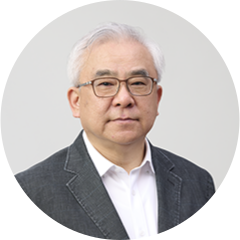
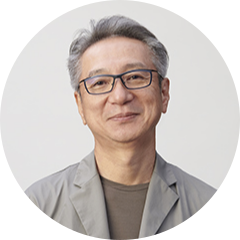
Hiroaki Watanabe
Industrial Designer
Unit 7 covers PCs, smartphones, their peripherals, and other information equipment. As is usual with mature categories, entries in this category seem to have undergone little change at first glance. As far as products in this category are concerned, even a little increase in volume or weight is put under close scrutiny. These products have other restraints as well, including little leeway in design. And yet, at a closer look and touch, depth has emerged in some products. They are the result of engineers and designers having clear product objectives, studying them over and over again, and diligently working on them. Here are some products that struck a chord with the jury.
New series of Let’s note (26G070431): The Let’s note brand has maintained its distinctive style for three decades regardless of the trend. A long history of its succession and progress has won the trust of users. Finding value in not changing makes it a product of great pride.
FMV UX-K3 (26G070446): This is a super light model from the long-established PC manufacturer. This model weighs only 634 grams, an extraordinary level when any laptop weighing less than one kilogram is considered light. It is no exaggeration to describe it as a perfect model, although it has the kind of form everyone thinks of when they hear the term “mobile PC.”
Slim Tap (26G070404), a power strip designed to allow plugs to be inserted both horizontally and vertically: This “dream” power strip beautifully solves the inconvenience everyone routinely experiences. The unique collective form of outlet slots symbolizes this product.
The vibrating power bank (26G070408): This product is designed from a perspective that is completely different from those of existing products. The design team conducted study after study to accommodate persons with visual impairment. Their efforts culminated in a product that is convenient even for persons without disabilities — a product of courage and love, so to speak.
Apeos C7072 series (26G070499): This large-volume multifunction printer uses recycled resin for its outer cover. This is an outstanding achievement of its kind. The stone-look CMF blends in well and looks comfortable. The neat proportion and meticulous design are suitable for the flagship model.
Under fierce competition, all these products refrained from resorting to easy differentiation; they were born out of the manufacturers’ deep understanding of the target users and firm commitment to creating products that accommodate them. Good design is not about eccentricity or fashion; it is a product of the continuation of such sincere commitment. That is what I was made aware of anew.
Going forward, the market will likely experience a wave of AI devices. I have an unfailing interest in how AI is expressed in hardware rather than how AI generates designs. The agency lies with humans.
UNIT07 Jury Members




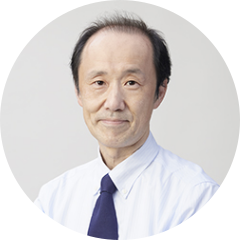
Tamotsu Murakami
Design Engineering Researcher
In the screening for this unit in 2026, the following three types of design impressed the jury. Here are our reviews of them and the reasons why they stood out.
The first type is designs that adopt technologies distinctive from conventional ones. The thermoacoustic cooling system ONE-LOOP (26G080502) takes advantage of the thermoacoustic phenomenon to produce cooling energy, thereby lowering temperatures. This is made possible with the use of waste heat from factories and elsewhere without having to use electricity. The hyperspectral camera AG-HSV10M (26G080503) adopts random filtering to achieve both high sensitivity and spectral resolutions that are higher than those of conventional RGB cameras. The ultra‑fine water penetration technology Hydraid (26G080504) generates fine water particles with the proprietary technology of a special membrane. Water particles thus generated are so fine that they get into the inside of hair and skin and remain there without wetting their surface. The whole-body X-ray CT diagnostic equipment Ultimion (26G080505) is a technology for measuring an X-ray in terms of photon counts rather than its dosage. It both enhances diagnostic capability and reduces X-ray exposure.
The second type is designs that have been achieved by pursuing the best features a product can offer. The binocular indirect ophthalmoscope IO-Vega (26G080506) features a lightweight and novel mechanism. It is designed to enhance both diagnosis by ophthalmologists and their communication with patients. The Feller Bucket Grapple GFB-90S (26G080527) is an attachment to be mounted on the tip of a hydraulic excavator or the like. This single attachment is capable of everything from felling and digging to compaction and yarding. It is expected to help reduce labor shortages in the industry and improve operational safety. The next-generation high-pressure gas container CubiTan® (26G080553) is not cylindrical in shape like conventional compressed gas cylinders. It is a spherical pressure container encased in a cuboid housing that makes for easy carriage and storage. It has an IoT-enabled function of checking the remaining amount of fuel and pinpointing its location. With all these features, the product provides a piece of next-generation gas distribution infrastructure. The CHRYSANTHEMUM-HANDLE (26G080554) is a valve knob whose chrysanthemum-shaped design allows for a firm grip, smooth rotation and easy identification for everyone, and represents the brand.
The third type is designs that use novel materials. Ceraluminum™ (26G080574) is a unique material that combines the lightness of aluminum and the scratch resistance of ceramics. Its appearance and texture are like a cross between metal and stone. Rice Silica (26G080575) is a type of high-purity silica that is manufactured from rice husks, which account for the largest proportion of agricultural waste generated in Japan, with a unique, eco-friendly process. The spherical silica Sciqas (26G080576) is an ultra-high-precision type of spherical silica that pursues sphericity and size uniformity for next-generation circuit boards.
Some other entries demonstrated excellent designs that support industry, health care, daily life, and society with various approaches.
UNIT08 Jury Members
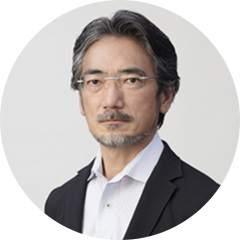

Hiroki Sato
Ph. D. Design
This unit covers furniture, lighting equipment, and building materials. This year’s screening highlighted general trends toward minimalism and noiselessness regardless of whether the products are designed for home or business use. These products reflect their users’ orientations in the living environment, contemporary lifestyles, and value consciousness. It is not, however, that pure simplicity rules. High levels of expressive power are needed for products to achieve high quality or aesthetics while being minimalistic.
At the same time, minimal designs that shed excessiveness can improve manufacturing efficiency in terms of material consumption and processing. They can play an important role in addressing waste problems and labor shortages. But minimal designs cannot be considered excellent if they resort to greater efficiency alone and fail to bring about well-being. In the screening process, many products were highly evaluated because while displaying the contemporary minimalist style, they achieved high efficiency, functionality, and quality at the same time.
The downspout for large buildings (26G090690) shows high drainage performance and durability that can cope with intensifying natural disasters of recent years. With slimmer pipe diameters, the design enhances both harmony with the building and the wider landscape, making it a design of social significance as well. The ALLROUND (NII) (26G090624) stool has an iconic and primitive design and features an excellent texture and robustness characteristic of a metal material. Its flat-pack packaging reduces transportation costs. The Fain Through (26G090677) grating has achieved a higher water-conveyance performance and cleanability that are required in commercial kitchens and other similar operational spaces with a simple and coherent design. Its design, including the exterior, has high potential for a better work environment. The secret door hinge (26G090686) features a door design that minimizes visual noise when the door is opened and closed. The ease of mounting is designed to make up for the shortage of interior construction workers and the lack of experience. All these products have an excellent design that features high marketability, better functionality, and a good problem-solving capacity with a minimalistic design approach.
Every year, how the entry differs from existing similar products and what novelty it offers are on the agenda at screening sessions. A premium is placed not only on the aspect of technical innovation but also on what new perspective and value the design has to offer. Products that had a high level of perfection but failed to clearly set themselves apart from existing products in light of such criteria failed to earn high marks.
UNIT09 Jury Members





Noriko Hashida
Product Designer
Products subject to screening in this unit are diverse. Thus, their trends are reviewed by genre as below. The first genre is products related to people’s mobility. The facial recognition walk-through ticket gate stood out. This product involves the implementation of the high-precision facial recognition technology Japan has developed in public transportation. It elevates the experience of walking through the ticket-gate to a stress-less and smooth experience. Among other entries that make for smooth mobility were products that facilitate the supermarket shopping experience, including a security gate and a tablet for the shopping cart. I hope to see more stress-free products in this genre.
The second genre is chargers and power stations. We received many entries of large power stations for home use that help during outages due to natural disasters. What stood out in the presence of these products was a power station specifically designed for refrigerators, which are useful for preserving food and medicine, two of the most needed items during disasters. The jury highly evaluated this product because its slimness and flexible positioning lend themselves to practicality. The charging equipment for EVs is novel in that it is a wall-mounted type for space saving, making it distinctive from a floor-standing type typical of conventional products. Interestingly, its large and thin tile is used to create public art or otherwise enhance urban landscapes.
The role played by security equipment at the home entrance and for interphones is increasing its importance year by year given the increasing number of double-income households, aging population, a wider use of home delivery services, and a growing public security awareness. Products in this genre are evolving with such features as a 4K camera, motion detection, AI facial recognition, automatic answering, luggage storage, and a siren. Their UX designs are improving as well. There have long been many entries of home delivery boxes at condominiums and apartment buildings. Their function of storing refrigerated and frozen items is beneficial for both delivery service providers and receivers. We received a few interior-friendly luggage storage boxes at luxurious hotels and other public spaces. I hope to see more improvements in such products going forward.
In the genre of wet areas, many entries of products are more hygienic than ever and benefit from added features for further energy saving. Standing out among other kitchen fixtures was a product that automatically cleans the inside of the drain trap of a sink. There were entries of sophisticated toilets that feature completely touchless control, seat underside cleaning, or minimum parting lines.
There were a lot of entries of showers with diverse features, many of which are mist or ultra-fine bubble generation among other cosmetic benefits and healing effects. We also received entries of showers with simple features for cleaning, childcare or pet care that prioritize light weight and ease of use.
In the genre of air conditioners, some foreign products had clear appeal, while domestic entries seemed to take a subdued stance in that regard. Among these entries were products that were redesigned in terms of workability and safety, qualitative stability, and resource saving from the perspectives of installation and repair service providers. In particular, a product developed through restructuring many models based on common ideas gained high marks.
As a general trend, fixtures and equipment products are designed not to generate architectural or spatial noise, not to give stress to people’s movement, and to be simple and have easy-to-understand features.
UNIT10 Jury Members



Kota Nezu
Creative Communicator
In the category of mobility this year, we received more solutions than usual that tried to create new value out of the conventional box. Such solutions attempted to go beyond the boundary of mobility or even change its definition. They seemed to epitomize various social conditions.
Key highlights include a robotics-assisted wheelchair capable of going up and down stairs as an extension of the body; a cruise ship that renders views from the ship as an experience in the form of an extension of a hotel lounge; an outside broadcast audio truck designed by engineers and developed meticulously just like a comfortable and recording studio with an immersive atmosphere; and a small, walking-speed mobility solution like a moving piece of furniture that allows users to get onboard and off at their leisure and creates new relationship between them and the surroundings. All these solutions go beyond their original categories and try to reconfigure their value.
In the field of railways and shipping, we received some solutions that translated narratives of local history into design amid the accelerating momentum of developing and operating these means of transportation in closer relationship with the local community. These include an unusual train car model that incorporates ideas about the local history of transportation by water into its vehicle design, a fixed-route bus model that respectfully and meticulously imitates a train car model that has been in operation for more than half a century, and a ship that attempts to transform the local urban waterfront that is now nothing more than an urban back space into a bustling front space like it used to be. All these solutions are interesting in that they try to create a kind of value that is aligned with the history of the local community.
In the field of passenger cars, Japanese manufacturers put forward solutions that cherish and protect their heritages and make innovations based on them. These solutions, which combine the traditional value of their brands with innovation at a high level, highlight the underlying strength of the Japanese automobile industry. Meanwhile, Chinese manufacturers are making remarkable progress. Strong government support as a national policy allows them to develop products in a short period of time. They are also steadily improving quality model after model. That is worthy of special mention. Also impressive was the animated activity of the developers we, the jury, came to know in the screening process.
We received many well-crafted solutions on the back of chronic labor shortages as well. They included a support system for railway operations and training for related personnel, as well as systems designed to promote better efficiency and automation of logistics. I want to continue paying attention to designs that may be inconspicuous and unsung but support society.
Overall, this year’s screening has seen many new flowering ideas that embrace various perspectives in the category of mobility, which is growing in diversity more than ever.
UNIT11 Jury Members



Hiroyuki Ito
Architect
Buildings are subject to scrutiny when and after they are constructed. This year, higher marks were often given to entries that looked at buildings in an extended timeframe and focused on the process of making, which covers the pre-construction phase as well, and may have had difficulty communicating their true value with a single picture alone.
HAND MADE (26G120846) is a large-scale project to build brick houses in India. In the local building environment where skilled engineers are in short supply, the project started with building housing for workers. This was followed by the process of providing them with technical training. Beautiful spaces were then designed with the use of the construction method they were capable of.
Father and Son’s House (26G120847) is a project to reconstruct a house originally built by a now-deceased carpenter by his son. The son considered the framework of the original house, found value in it, and accordingly added a new outer structure for his family to live in. The project offers a new approach to taking over an old house — a method in which the existing and new buildings complement each other both structurally and spatially.
The Arimasuton Building (26G120848) features a construction method that allows for self-construction, high durability, and impromptu design in detail. The builder has continued with the self-construction work for more than 20 years with the practice of aligning thinking with making. This entry was given high marks as it represented an ideal form of architecture.
NIKAIMENOIE (Second House) (26G120844) is a house rebuilt from an old house that the new dwellers bought as material but lived in nonetheless for several years before carefully dismantling and reconstructing it. They have plans for a third or even fourth house.
I put forward the Arimasuton Building and NIKAIMENOIE as candidates for the GOOD DESIGN GOLD AWARD from Unit 12 for discussion at an overall screening panel session. Various options were expressed there, providing me with a valuable opportunity to think anew about the nature of the GOOD DESIGN AWARD. A major takeaway from the overall session was the understanding that design represents both an expression of the creator and a reproducible technology or mechanism for others. I brought this takeaway back to the jury of this unit.
As I observed on-site, NIKAIMENOIE felt like it was filled with the trust and joy of the designers, who also manage a construction firm, in manufacturing. The designers said they envisioned the prospect of a greater local community involvement to ensure local material circulation. Discussions at the unit level concluded that the architectural activity of repeated renewal is expected to continue into the future and remain socially relevant. Thus, the unit jury decided to recommend this entry as a candidate for the GOOD DESIGN GOLD AWARD.
UNIT12 Jury Members



Mari Tochizawa
Architect
Unit 13 chiefly focuses on medium- to large-sized condominiums and apartment buildings. This is the unit in which changes in social conditions are more likely to directly manifest themselves. Recent years have seen rising condominium prices, especially in urban areas. Market value indicators such as the floor area, the distance from the nearest train station, and access to central Tokyo strongly define condominium construction projects. Construction costs are rising sharply, making it more difficult to allocate the budget and space for architectural innovations and other new efforts. Overall, there were not necessarily many ambitious entries this year that attempted to renew some of the conditions surrounding condominiums and apartment buildings, including solutions for urban wooden buildings and those for new ways of living.
Meanwhile, a few entries offered important insights for thinking about new value for condominiums and apartment buildings. The Koenji Apartment (26G130918) offers a sense of collective sharing by allowing small businesses in the apartment to serve as a hub for interaction among the dwellers and with the local community. It refrains from providing a luxurious common area for this purpose. Terrace House in YAMAGUCHIDAI (26G130919) and kinone higashikurume (26G130917) offer a space of their own by carefully interpreting local landscapes and the individuality of the owners, nurturing the residents’ attachment to their respective local communities. In addition, the Noborito and Mukogaoka-Yuen Area Development: Machi ni Yohaku wo Amikomu (development in the Noborito and Mukogaoka-Yuen Area: weaving “space margins” into the community) (26G130916) involves the deep engagement of the developer, designers, architects, and other stakeholders in the whole project, covering everything from planning to leasing. This allows for coexistence between spaces for people’s lives and those for their livelihoods so that these activities manifest themselves in the townscape. The result is the greater spatial value of the local community.
What these entries have in common is the commitment to nurturing a sense of collective sharing and attachment to the local community among the residents and turning them into closer relationships with the local community, rather than confining a condominium or apartment building to a stand-alone commodity. A fierce market makes it all the more important to support people’s lives, foster relationships with the local community, and create a mechanism by which the value of a building will grow over time, rather than leaving that value to be determined by market metrics alone. I hope that these takeaways from the screening process will be shared with not only architects but also many other stakeholders involved in condominiums and apartment buildings and serve as a catalyst for putting forward new value criteria to society.
UNIT13 Jury Members
Taro Igarashi
Architectural Critic
This is the third year in a row that the author is in the jury for the unit of industry and commercial facilities. Unlike public facilities, these facilities are private in nature. Thus, the wishes of the clients are strongly reflected in them. This is a major characteristic of this category. And yet, many successful entries are facilities that are semi-public in nature because their designs are open to the neighborhood. These facilities are designed not to enclose their premises as private land. Several entries were designed with local disaster risk reduction in mind. Still, rising construction costs, which are nowadays in the news, are putting the brakes on building designs as one wish. And the category of industry and commercial facilities is no exception. Therefore, remarkable entries are increasingly found in the domain of renovation rather than new construction. This trend is expected to continue for some time to come.
In Unit 14 this year, a total of 72 entries won the GOOD DESIGN AWARD. During the screening process, I sometimes found entries with insufficient materials. In such cases, I felt that the applicants were wasting their efforts. Some entries lacked logical explanations about the context and situation in which the design was created. Others came with a CG only, not a photo of the actual product. (The latter was often the case with entries from abroad.) Jury members tried to read the intentions of these entries as much as possible. Actual products in the category of architecture could not be placed in the screening session venue for review. Going forward, applicants in this category are encouraged to make presentations that are easier to understand than those in other categories. This is because the jury cannot recommend entries with confidence if it has unanswered questions about their designs.
The following five entries are among the Best 100 winners this year. Obviously, they all excel in design. On top of that, the YUKI office (26G141005) serves as a shelter in times of emergency under the agreement with the local government. The DAI-ICHI LIFE KYOBASHI KINO TERRACE (26G141000) is a medium- to high-rise building for office purposes that features a hybrid timber structure and stands in central Tokyo. JINS Ginza Store (26G141045) has been constructed by remodeling part of the Kyobunkan Building, serving as a new façade of the main building. The Mishima Office Building (26G141001) is the hub of the distributed headquarters complex that blends into the townscape. And finally, the Kasumigaura Lake Community Place (26G141039) is the result of boldly renovating a public facility that lost its purpose. There are already many examples of revitalizing modernism in architecture. Meanwhile, idiosyncratic post-modern buildings that gained popularity during the economic bubble years are expected to grow in importance more than ever. As a model case of such architecture, the jury gave particularly high marks to the Kasumigaura Lake Community Place.
UNIT14 Jury Members



Kaori Ito
Researcher in Urbanism
Today, the social environment is becoming more complex, making future prospects uncertain. Even so, public structures and infrastructure must be designed from a long-term perspective. That poses a major challenge. The award-winner entry this year that positioned itself from the longest-term perspective was the Tokiwa Bridge (26G151132). This bridge has existed for a very long time in Tokyo. It is made of materials taken from the stone walls of Edo Castle. And it will survive large development projects to come. This project has renovated the bridge, which has exuded presence and been renovated as needed in the past, with innovative methods so as to responsibly hand it over to future generations. Designs that position themselves from a long-term perspective were also seen in projects to renovate public facilities. Standing out among them were SAKAKURABASE, a project to renovate the old Ueno City Hall building (26G151067) and the project to construct a new Shimoda City Hall building (26G151068). Both of these projects had a clear vision about what to pass on to the future and what to renovate as needed.
As another trend, a great number of entries used phrases like “open to the neighborhood” and “open to the local community.” This trend clearly shows that designs whose scope is not limited to premises themselves are becoming the norm. Conversely, such catchphrases alone can no longer effectively characterize award-winning entries. How such openness was designed and what change it brought about to the local community should be put under scrutiny. The landscape museum project Nagano Prefectural Art Museum and Nagano City Joyama Park (26G151089) boldly took on the challenge of creating a design that transcended several boundaries. The project successfully improved the tourability and image of the entire landscape area. Kaohsiung Station (26G151101) is an urban design project that transcends site boundaries and different maintenance and management sectors. It has created an integrated urban space and infrastructure, offering a clue as to what future development should look like.
Another type of award-winning entries that stood out were mature projects that followed the design process in which an architect made a proposal and involved prospective stakeholders across the planning, designing, and management phases. Examples include Sentsuku (26G151130) and BON-YADO U (26G151105).
The 2026 screening process for Unit 15 provided us with the opportunity to encounter these excellent award-winners that transcend temporal, spatial, and process dimensions. Amid the ever-worsening situation surrounding architecture, we continue to hope to see more design approaches that create more value by expanding design boundaries.
UNIT15 Jury Members



Hisae Igarashi
Interior Designer
Unit 16 focuses on interior space in general for screening. This is the second year since this category was established. Compared with last year, we received more entries in more genres, ranging from home and office to commercial, public, and educational facilities.
In particular, office-related entries increased in number. Discussions and explorations on work styles can lead not only to solving problems. They can also prompt companies to make better use of office space as they try to communicate their future visions, values, and identities inside and outside the company. In addition, public places open to all are diversifying especially with regard to their objectives, ranging from communication, relaxation and healing to disaster preparedness. These places can serve as a medium of expression for companies to let people know about themselves, including how large they are and what they have to offer.
More and more efforts to preserve and utilize historic and cultural structures are being made in Japan and abroad. Some such buildings have been preserved as part of the traditional local townscapes and converted to art galleries, museums, and hotels or otherwise repurposed. Partial modification is essential to meet current functional requirements. It is important to identify what aspects of such structures should be passed on to generations to come and make it clear to them.
An increasing number of home renovations involve putting existing buildings to good use by, for example, exposing some of their structural elements for aesthetic or other purposes. The delicate balance or harmony between existing and added parts can constitute a source of originality. A system for renovation with greater latitude can reduce costs and waste associated with renovation work.
Increasingly, commercial construction projects embrace a place of belonging. More specifically, such projects are designed to provide a store space that is created with product relationships in mind, including lounge rooms, events, and exhibitions and allows visitors to find value in staying there.
Financial or healthcare institutions are beginning to set up a consultation desk on finances or health for customers or patients to think together about the question, “How do I want to live going forward?” This budding trend raises expectations for more opportunities for engagement with regard to some of the problems local communities and individuals face.
The value of sharing is increasing among the dwellers. The screening process provided an opportunity to know what options are available as to what to share in view of the quality of life and cost.
Eighty years have passed since the end of WWII. My heart aches to see natural disasters every year. Society continues to face such concerns as economic worries and how humanity should interact with AI. Going forward, I hope to see more solutions that reduce environmental footprints and increase disaster preparedness. There are more and more opportunities to support one another in the category of interior design.
UNIT16 Jury Members

Daisuke Moriuchi
Designer
As I recall, the screening process this year prompted us, the jury, to reconsider what intrinsic value design has in the category of the media and communication in an era in which information and visual content are generated and distributed at an unprecedented speed. Entries that earned high marks in this context are often those that aim to do more than just efficiently communicate information. They created an opportunity to redefine the relationships with the issues they addressed, with the things they focused on, and even with customers and society through on-site and hands-on experiences.
Award-winning entries this year belong to various domains, including spatial exhibitions, events, packages, and brand communication, but share a common perspective of reconstructing experiential value. Among these successful entries are exhibition designs that turn viewers into participants, attempts to use space itself as an extension of a dialogue apparatus, and presentations to communicate the values of brands and facilities in a hands-on manner. All these winners have created new nexuses that connect people with people and people with society.
In addition, another common denominator in many award winners is not only the commitment to showcasing the completed products but also the commitment to visualizing the processes and relationships behind them. These entries seem to incorporate, in many areas, the idea of interpreting the communication of information not as a mere one-way conveyance but as a circulation of information that involves empathy and participation. This involves dialogue with diverse stakeholders, the passing on of culture and technology, and experience design that promotes the understanding of social issues, among other things.
Moreover, award-winning entries in this category offer important insights into the digital-physical relationship. We now live in an era where generative AI produces large amounts of information and expressions with ease. This highlights the value of the atmosphere and a sense of scale that can only be experienced on site, casual encounters with people, and embodied understanding. An approach that focuses on enriching human experience rather than technology itself deserves high marks.
While belonging to different domains, this year’s successful entries shared the same characteristic, that is, they all designed experience that could not have been possible without the place, opportunity, and people involved.
Generative AI will likely continue to drastically change how information and culture are communicated and how we use and experience them. What emerged through the screening process this year is the fact that the more technology advances, the more it becomes important for humans to understand the world through hands-on experiences and to experience the sharing of values with others. Going forward, how will new expressions and systems that connect people’s experiences and values be created? I look forward to seeing that.
UNIT17 Jury Members





Tomomi Sayuda
Experience Designer
In response to the trends toward AI, digital transformation, sustainable society creation, and others, this unit received many entries from operational efficiency improvement to social infrastructure design from various sectors such as industry, public administration, social welfare, and education. The jury screened entries in light of a comprehensive set of criteria. These included the ability to solve social issues; conceptual novelty; perfection as a design; innovation in terms of technology, business, and social infrastructure; sustainability; and viability. Particularly at issue in this unit was the novelty and social impact of entries as systems and services designed to further improve people’s lives.
Higher marks were given to services that set out a new future vision. These included entries that address social issues with the combination of a creative viewpoint and new technology and thus raise expectations for a better life, as well as those designed to transform cultural content into a new form of entertainment. As a conspicuous trend this year, we received many entries of AI-enabled services and digital services that involve physical experience.
MiseMise (26G181310), which won the GOOD DESIGN GOLD AWARD, is a retail management system that builds a digital twin for stores through mapping by an autonomous mobile robot. This system was developed through substantial testing to help address a labor shortage in the industry. It was highly evaluated as a new service in the category of physical AI, which is currently attracting attention. MANGALOGUE: Hinotori (26G181363) is a new live performance format for manga that integrates the content with the robot arm, performers, and production. It was highly evaluated as a system that makes the audience marvel. Other entries that earned high marks also include a corporate initiative to define business indicators for promoting sustainability, as well as a project that puts the power of design into digital dashboards that serve as a core for government activities to improve accessibility to government information.
Unsuccessful entries, on the other hand, include those that are low in conceptual novelty, design perfection, popularity, or impact; those with an unsophisticated system; and those that can raise concerns in terms of social significance or ethical integrity. I hope to see more original designs for systems and services that shape a new vision going forward.
UNIT18 Jury Members

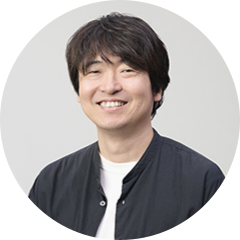

Yuki Uchida
Urban Designer
This unit focuses on local community initiatives and activities, so it attracts diverse practical projects designed to improve underpinnings of people’s lives, including livelihood, study, work, industry, and health care. To track changes in these practices is to look at to what extent design can engage with society and how. In addition, local community initiatives and activities are conducted by people who transcend their affiliations and areas of expertise. In that sense, they are more like public projects in nature. In this turbulent period, it is reassuring to see diverse actors opening channels for collaboration.
This year’s entries point to three major changes. The first is an increasing number of practical projects that start from an earnest desire and passion of individuals and then involve more people to update the meaning of platforms and systems. The community magazine Meguru, (26G191365) reports on the activities of local creative actors engaged in community life. The magazine has nurtured relationships with readers and supporters and has developed into an important medium for sharing the memories of and pride in the local community. The Hakodate Sora-boration Initiative Project (26G191367) and OHESO GAKUDOJO (26G191366) underwent constant transformation to play the roles most required of themselves for the local community. To this end, they transcended the boundaries of existing facilities and institutions and thought beyond given functions. The jury gave high marks to these entries for reconfiguring interpretations and relationships in their transformation process and producing insights for other local communities.
The second major change is that design is widening in scope and playing a deeper role in connecting different actors. In the domain of health care, social welfare, and other care, there are a growing number of practical projects that unravel fixed relationships and put people’s daily lives and even their life journeys in a different perspective. Ouchi Clinic Kamiyama (26G191369) has reframed health care in an everyday setting based on the accumulation of community development efforts. The Itochi Project (26G191397) has nurtured a relationship in which hospitals and the local community learn from each other. F-TRAD (26G191371) has untied the master-servant relationship between businesses of production sites and designers. Design is increasingly assuming the important role of serving as an agent between individuals and organizations to bring out the strengths of both parties.
The third major change is seen in those who undertake projects and how they are launched. Sen (26G191393) is a team of creators in their 20s who are based on regional production sites and/or engage in handicraft making. They form a network that transcends the boundaries of different areas and occupational skills to create new expressions and launch new movements. The Lemonha project (26G191404) by young people with different backgrounds leverages a multiple-trade network to expand its business into such sectors as retailing, the media, and industry. All these actors, who are based in their local communities, form a loose network to unlock the potential intrinsic to their respective communities and thus create new cultures and businesses. Their activities provide a hint as to how people should engage with the local community.
Often at issue in the screening process is the question, “What is the desirable design for the local community in question?” As years go by, there are increasing numbers of expressions and systems that are rooted in the local climate, culture, history, and experience, rather than superficial designs. Meanwhile, what such practical projects have brought about for the local community, what reaction they have received, and how they have built on it are essential for evaluation. It is also encouraging to see a growing number of entries that build on earlier entries to take a next challenging step with the outcomes of, and the lessons learned from, such earlier experiences in the long-lasting project process.
In his message to the 2026 GOOD DESIGN AWARD, the chairperson mentioned “design that advances vision.” I encountered many rich visions in many of the entries this year. These entries created new relationships and options for the local community by going back and forth between articulating a vision and making it a reality. In such activities, I felt the potential of local community design.
UNIT19 Jury Members



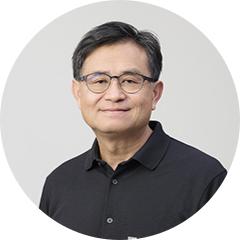

Miyuki Tanaka
Curator / Certified Social Worker
This unit focuses on initiatives and activities for the general public. It covers diverse domains, including the environment, social welfare, education, disaster preparedness, health care, the local community, and industry. Accordingly, this unit transcends many types of business as well. Every year, the jury for this unit finds it difficult to identify a common yardstick for evaluation. And this year proved to be no exception. For several years, we have asked applicants to state on their application form why they choose this particular category of initiatives and activities and what role design plays in their projects. This year, we added a special notice to this effect. Regrettably, however, many applications failed to fully elaborate on these two points.
Many of the initiatives that earned high marks are characterized by the fact that the scope of design covered not only the product or service but also the systems and relationships that made it possible, and even how the stakeholders should be involved. Particularly impressing among them were entries that not only added new features to the existing platform or system but also tried to reframe the participation requirements and human relationships that had been taken for granted.
A good example is LET’S EXPO (26G201428), a project that allowed the participation in the World Expo of people who had given up on the idea of doing so because of old age or disabilities. In cooperation with these people, this project made arrangements that made such participation possible. Cheer Signs (26G201429) is an extension of cheering at sports events into the visual realm. These two entries both question the existing preconditions as to who can participate and how, rather just adding support.
Such a perspective was seen across the domains. PUKATSU (26G201458) frames children as actors who venture into new things based on their interests, rather than as receivers of education. Abira Town Hayakita Gakuen (26G201467) is a school that serves as a hub for local community members to interact and learn. KUWAKUWA (26G201431) is a clinic open to local community’s everyday life. These are two examples of the entries that redefine the roles of existing facilities or institutions.
The Lawson Disaster Relief Store (26G201427) is a convenient store that doubles as a disaster relief center in times of emergency. The Shonan International Marathon (26G201435) changed the participation guide for runners to eliminate the use of disposable containers. Despite being in different domains, all these entries have something in common: they build on the existing platforms or activities to reorganize systems, which also entails behavioral change
Claiming to address social issues does not guarantee the value of design. What matter are who sets the agenda and whose experience or voice prompts behavioral or institutional change. Initiatives that gained high marks are designed not only to raise awareness that may be fleeting, but also to embed change in everyday options, organizational decision-making, and the local infrastructure.
Designing initiatives and activities involves more than finding the value of design in socially significant activities. Doing so also involves questioning how the design interprets the issue it tries to address and how it reinterprets and reconfigures human relationships, participation approaches, and existing systems and institutions. Screening diverse entries gave us the opportunity to tackle these questions for ourselves once again.